human-editable-ai-artifacts
Ask agents for rich output, but keep the source and the manual editing surface close enough for the human final pass.
 ISAAC FLATH
RAW2DRAFT
CODEX
WRITING-STYLE
VOICE REVIEW
ISAAC FLATH
RAW2DRAFT
CODEX
WRITING-STYLE
VOICE REVIEW
Isaac built Raw2Draft as a local writing and communication workbench powered by his own skills: editable HTML reports, markdown-to-presentation builds, D3/D2/Mermaid diagram generation, visual critique, transcription, voice review, and writing-style passes all feed back into the active file. AI gets the artifact close while preserving the handles Isaac needs for taste, judgment, and the last ten percent.

"I can have it create HTML, I can have it create this nice interface, but I can also manually edit it."
Raw2Draft is Isaac's local writing and communication app. It knows the active file, runs Codex with project skills, renders rich outputs, and keeps the source nearby. It is a text editor, a preview surface, and an agent workbench in one place.
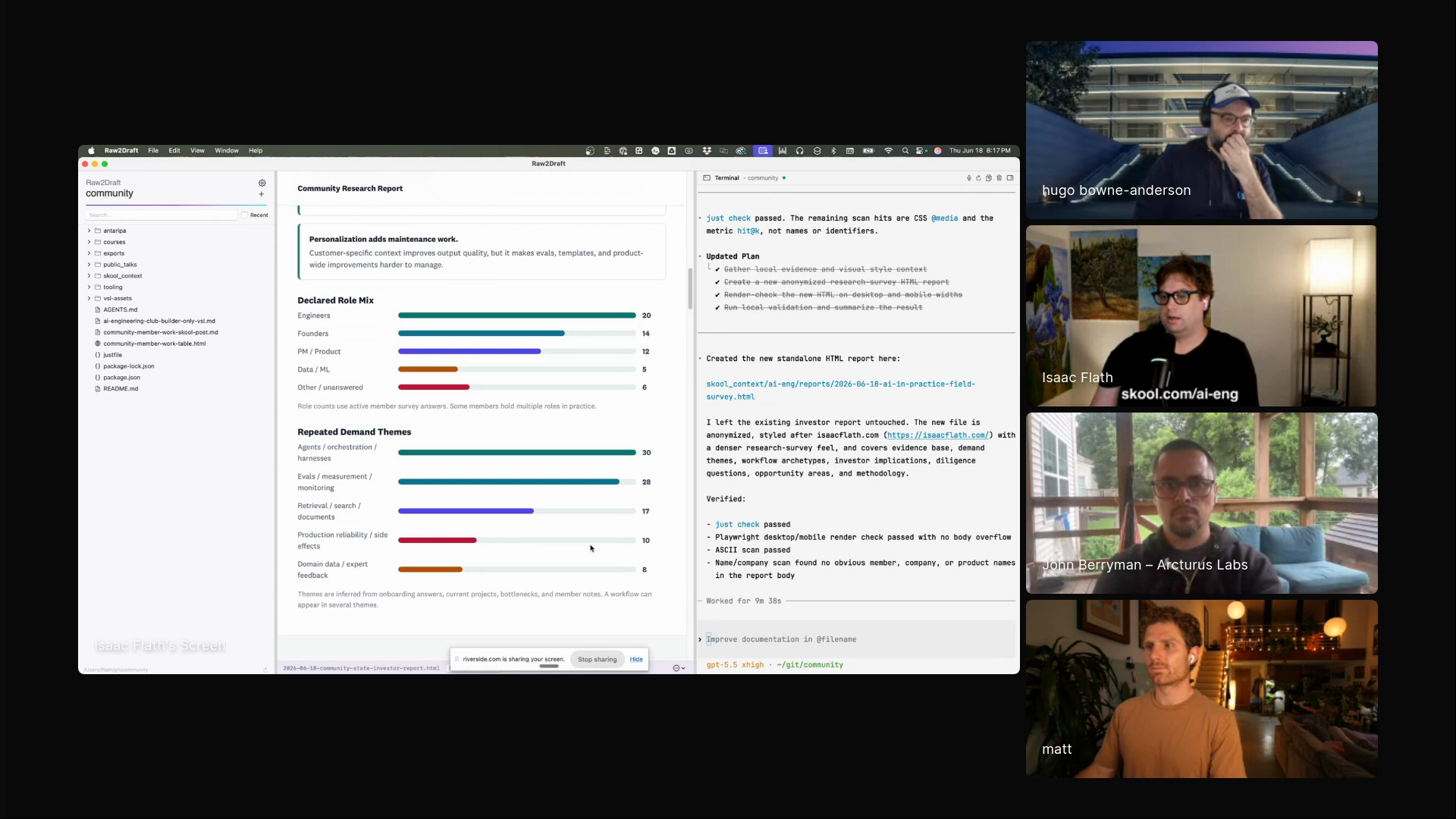
A generated HTML report can be polished without asking the agent to regenerate everything. A markdown presentation can hold talking points, code, links, and diagrams while still building into a shareable page. The model helps make the object; Isaac keeps the human handles.
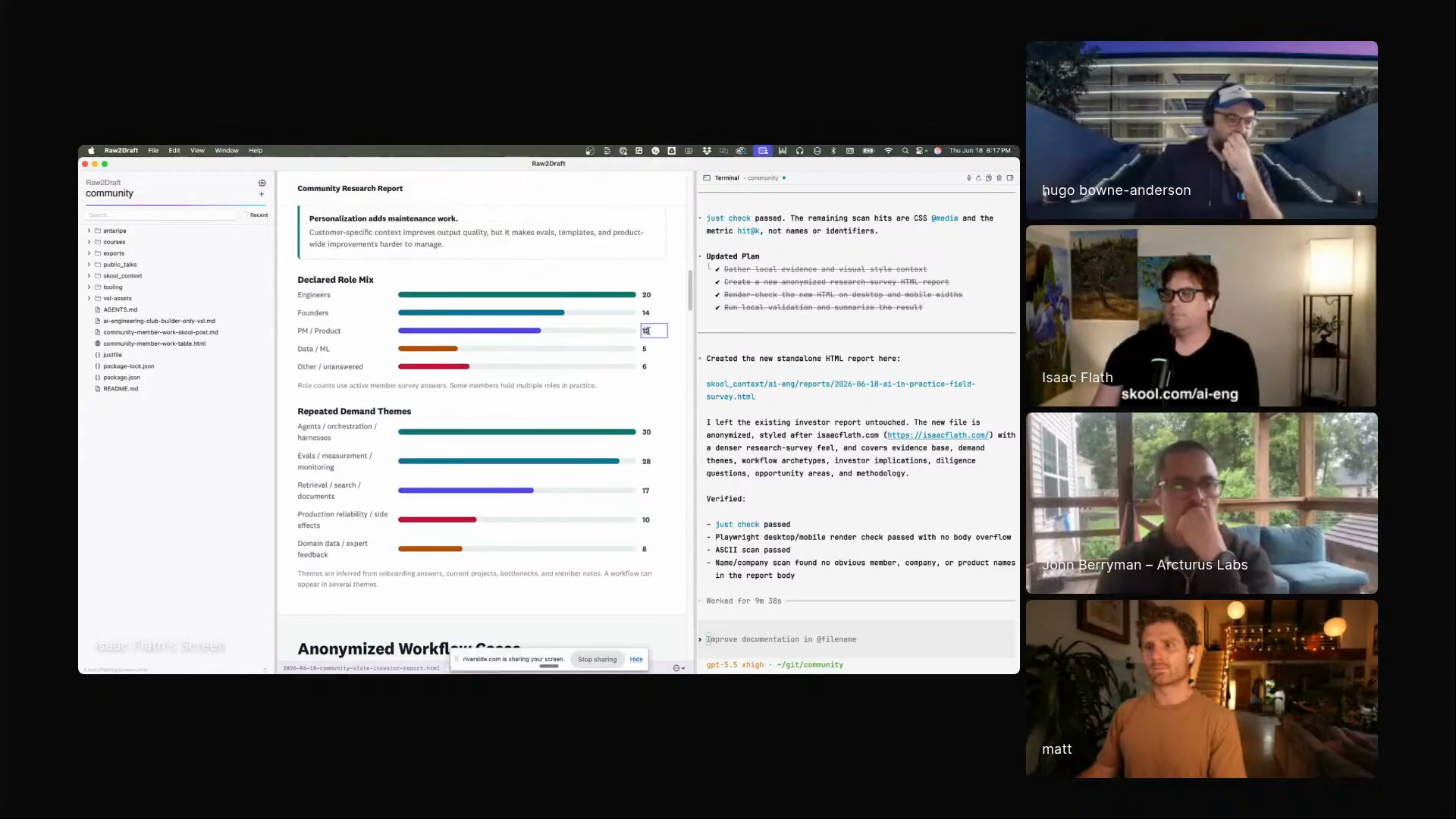
"It's ninety percent of the way there. Let me do the last ten percent manually."
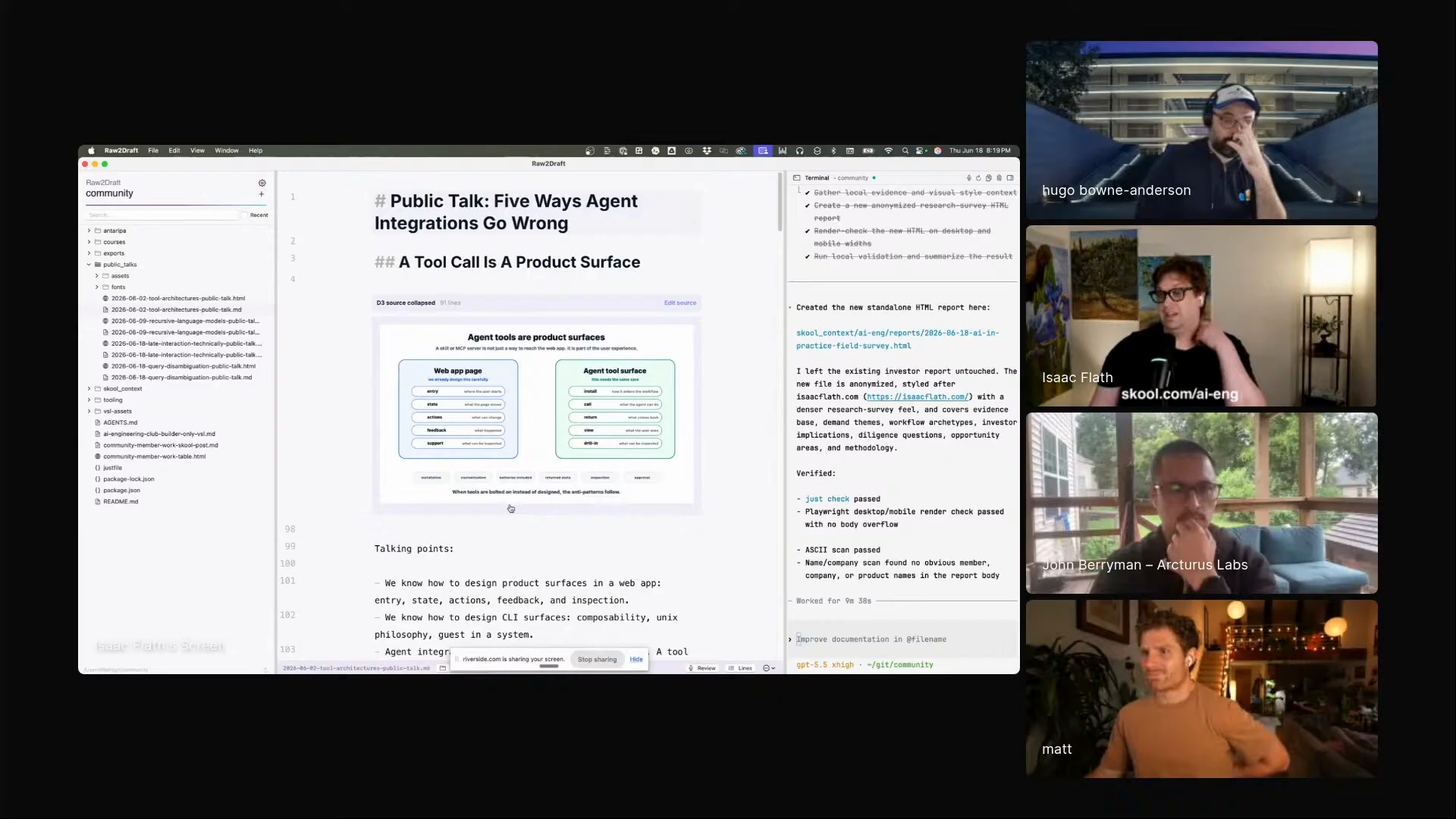
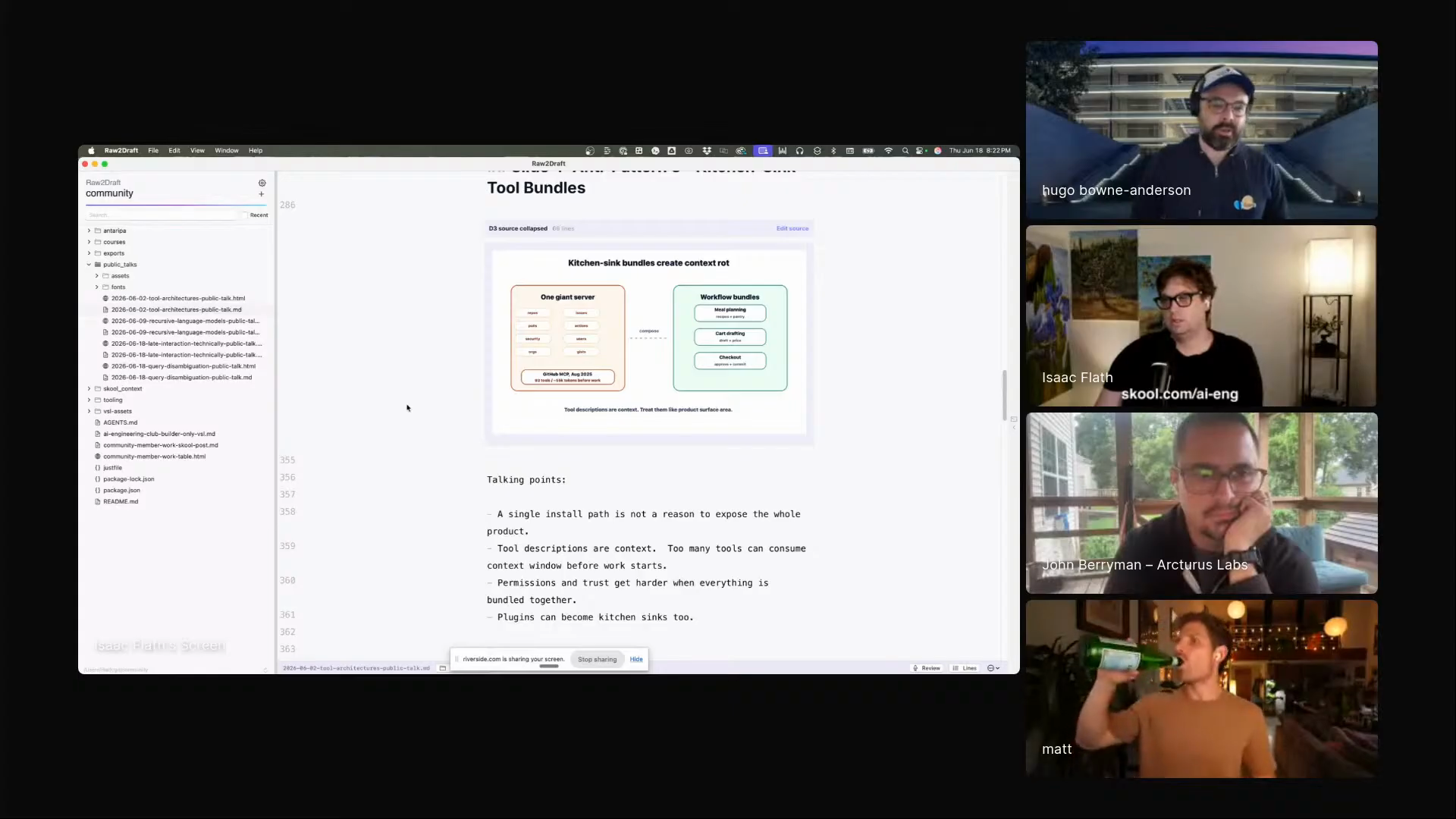
"It's like a point and talk interface."
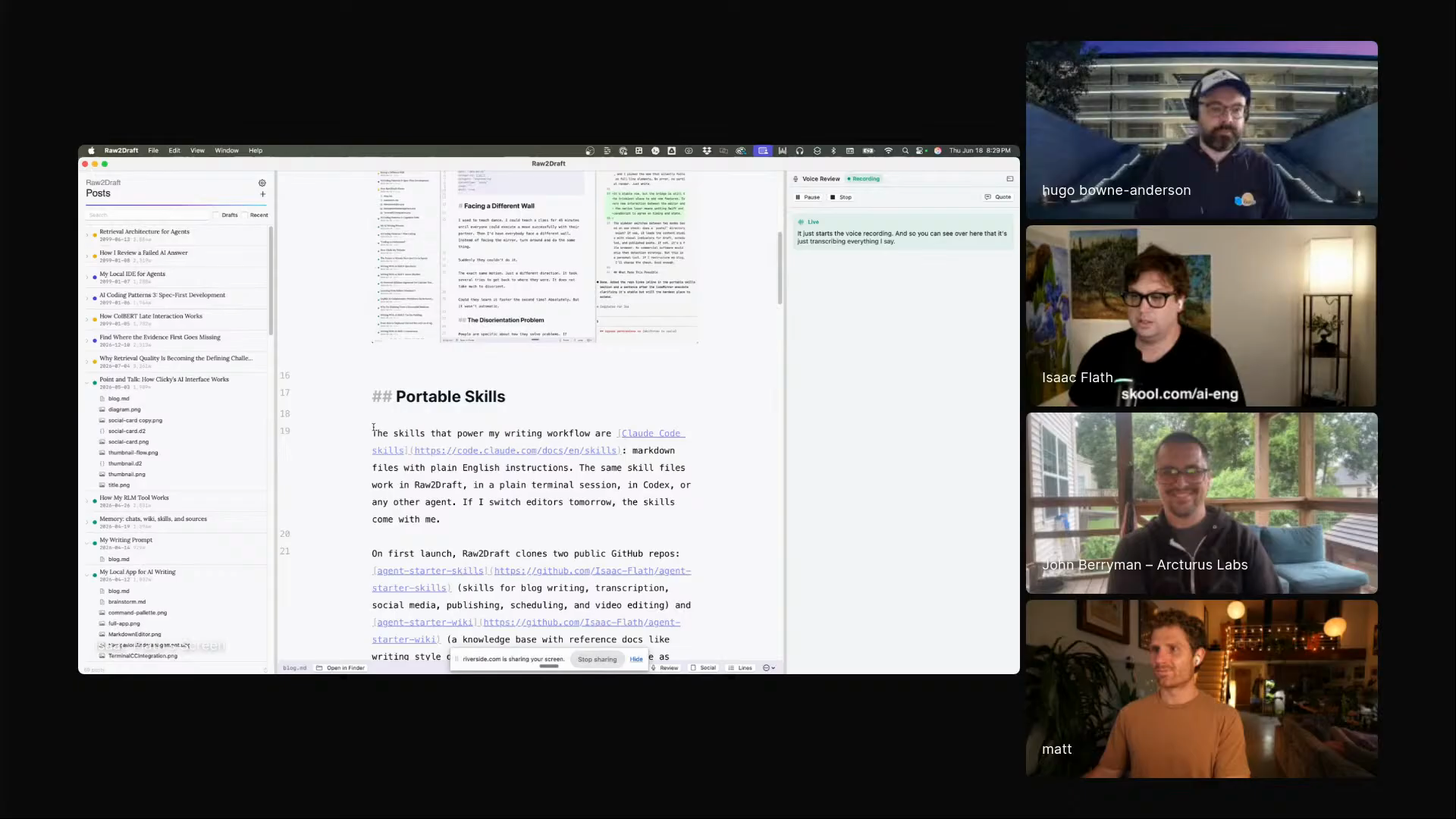
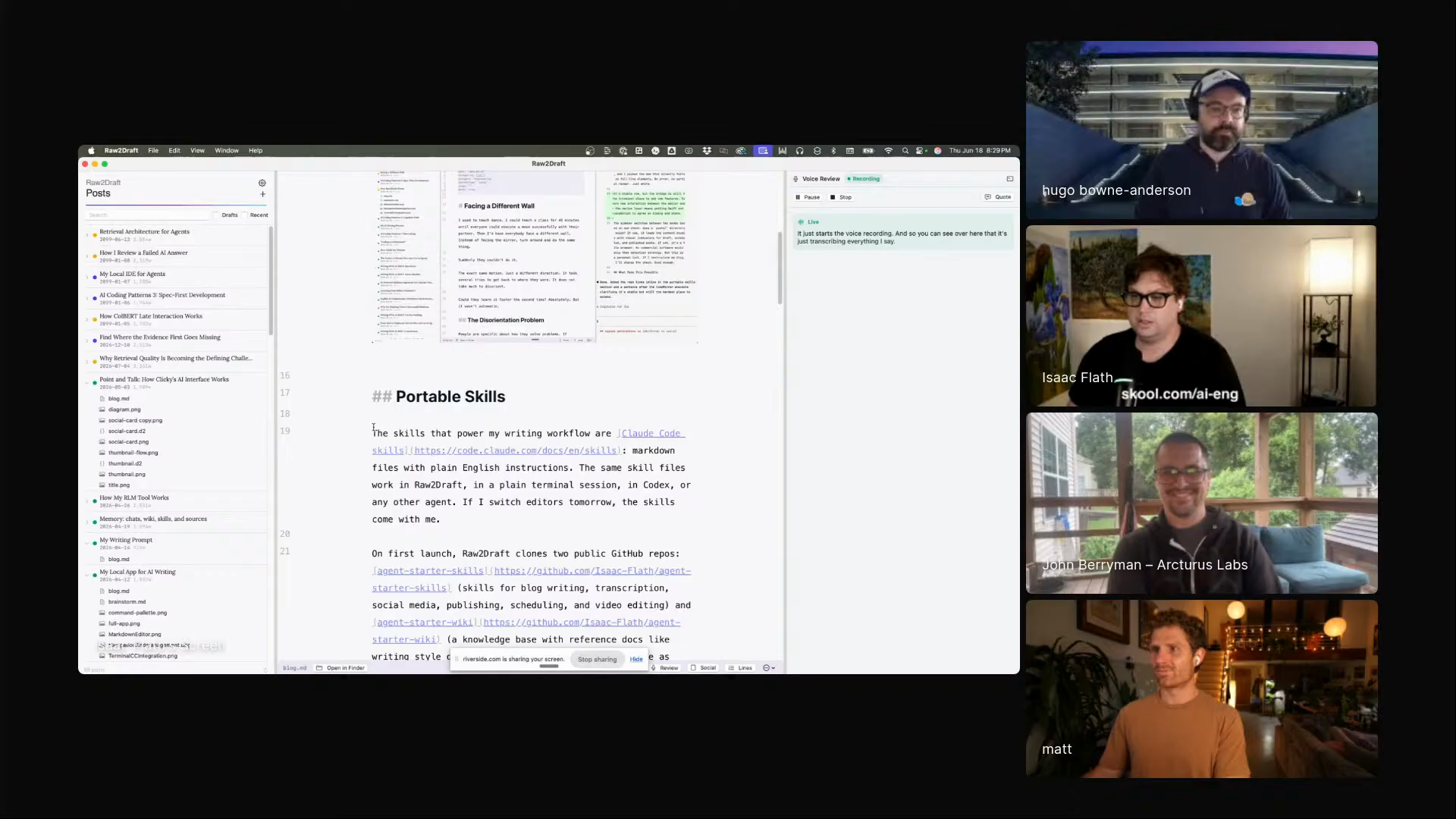
"Instead of just returning a chat, it returns like a widget."
Raw2Draft is powerful because it is allowed to be specific. It knows Isaac's blog folders, presentation folders, environment variables, fonts, and local habits. A blog post and a community presentation can open in the same app and reveal different affordances because the directory already tells Raw2Draft what Isaac is doing.
That same specificity is the product gap. A public version would need explicit permissions for local files and secrets, a discoverable voice-review interface, setup for transcription keys, and enough configuration to support other people's writing and publishing structures.
"I don't need my tutorial to sound like poetry."
Ask agents for rich output, but keep the source and the manual editing surface close enough for the human final pass.
Zinsser-first plain writing, deletion, critique, and clean starts before the human adds taste.
Turns markdown with slides, diagrams, links, and talking points into a presentation artifact that can be shared.
AssemblyAI word-level timestamps support voice review and precise cuts to filler words in video or prose workflows.
Screenshots and diagrams go to Gemini for feedback on overlaps, clutter, and visual problems before Isaac reviews them.
His diagram skill tells the agent that color should carry meaning, with small scripts checking common failures instead of relying only on prose.
He reads broad public skills before trusting them, especially when they give one design recipe for invoices, landing pages, dashboards, and tools.
Isaac's rule for public skills is blunt: if you are going to use a prompt or skill, read it first.
A broadly useful skill took real notebook use to get good: live environment access, back-and-forth communication, and repeated iteration.